 Marriage Point Calc
What makes Marriage different from other rummy games?
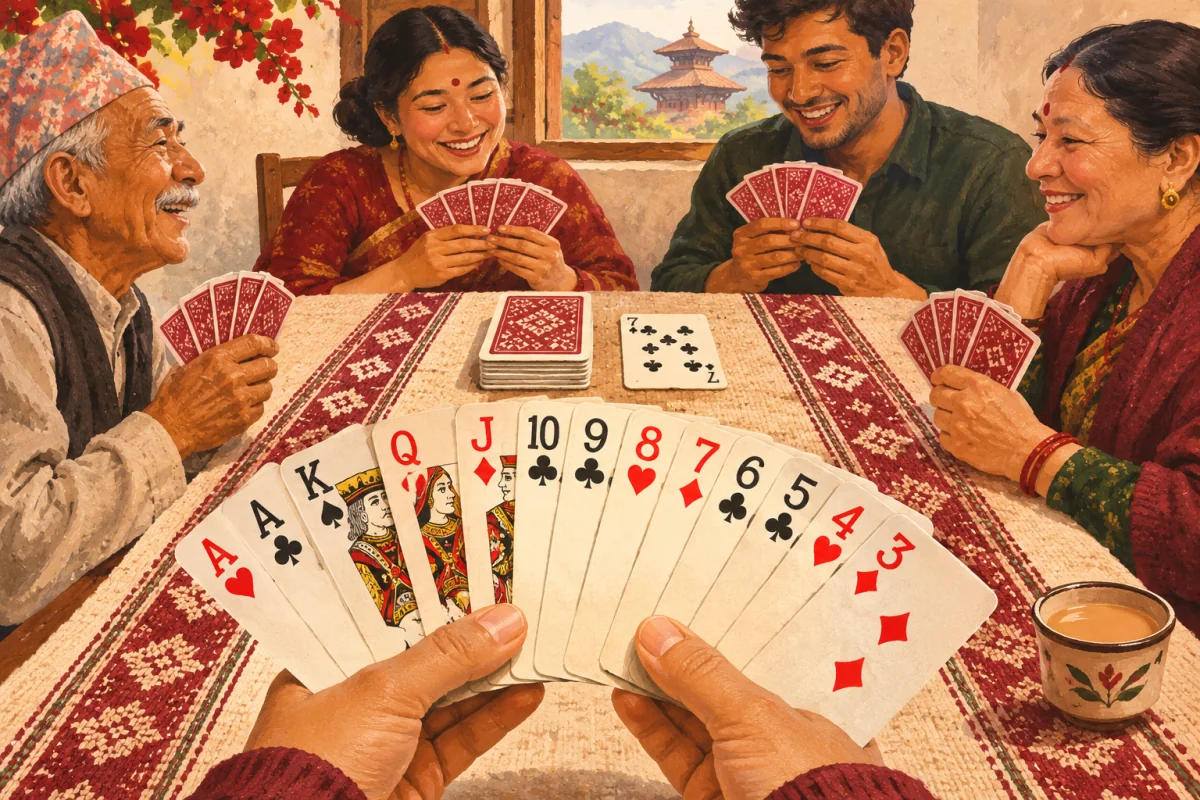
A traditional table seats two to five players. Three decks mean you can draw multiple copies of the exact same card. Three 6s of hearts, for example, make a tunnela. A run such as 4, 5, and 6 of diamonds is a pure sequence. Both are useful early in a hand because you need natural combinations to qualify to see the Tiplu.
The Tiplu is the hidden card that determines the wild cards for the hand. In the usual sequence route, play starts with a race to put down three pure sequences or tunnelas. Once you qualify to see the Tiplu, you can use wild cards to complete your remaining combinations.
What is Maal?
Maal refers to valuable cards counted in scoring. Imagine the Tiplu is the 8 of diamonds. Another 8 of diamonds matches it, and the 7 and 9 of diamonds sit immediately beside it. Holding those three neighboring cards together makes the combination called a Marriage. Your table may also count other special cards or bonuses.
Before your first hand
- Sort for runs and identical cards. Grouping your hand by suit helps you see gaps in runs. Keep identical cards together so you can spot a tunnela or a Dublee.
- Agree which variants are on. Ask about Dublee, Foul, and the table’s scoring for players who have and have not seen the Tiplu.
- Pick someone to record the round. The scorekeeper needs the player who finishes, each player’s status, and their Maal total under the table’s rules.
For a turn-by-turn walkthrough and a worked score, read the Marriage card game rules and scoring guide. When you’re ready to record your first game, use Marriage Point Calc to save your players and keep a running scoreboard.
Rules reference. Pagat’s guide to Marriage.